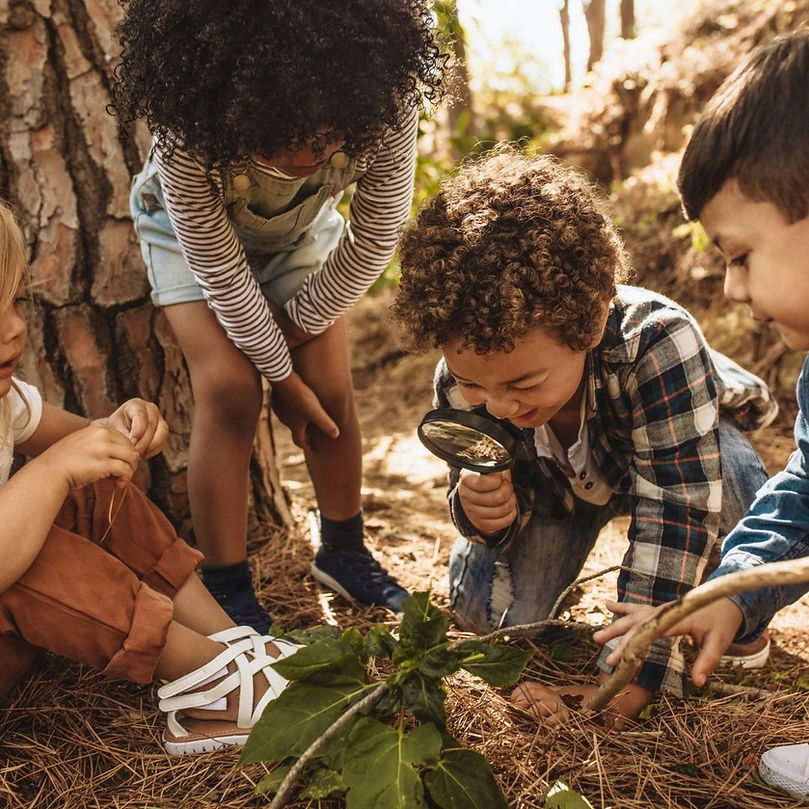
Why Nature Matters
Nature isn’t just a nice extra for children.
It’s one of the most powerful ways to support the nervous system.
Natural environments help the body slow down, reduce stress and return to a calmer, more regulated state.
When children spend time outside, their systems shift out of survival mode and back into a place where learning, focus and emotional regulation become possible.
What Nature Does for the Nervous System
Research shows that time in natural environments helps to:
• Lower stress hormones
• Reduce sensory and cognitive overload
• Improve attention and focus
• Support emotional regulation
• Increase movement and physical release
• Improve sleep and overall wellbeing
Nature provides the kind of sensory input the nervous system is designed for varied, gentle and non-overwhelming.
It gives the brain and body a chance to reset.

This Isn’t a New Idea
Long before modern research confirmed the benefits, many cultures understood the healing and regulating power of the natural world.
In Aotearoa, Te Ao Māori recognises the deep connection between people and the land, and the role the natural environment plays in supporting wellbeing.
Time outside, movement, fresh air and open space have always been part of how humans recover, regulate and stay well.
This isn’t a new strategy.
It’s something our bodies have been designed for since the beginning.
Modern life has simply taken us further away from it.
The Groundwork brings this connection back - not as something extra, but as something essential.
What's missing in childhood
Many children today spend most of their time indoors, sitting, on screens, or moving between structured activities.
At the same time, their environments are:
-
louder
-
faster
-
more stimulating
-
more demanding
Without enough time outside to recover, the nervous system stays activated.
Over time, this can show up as anxiety, restlessness, emotional overwhelm or difficulty concentrating.
Nature helps restore the balance.
It Doesn’t Have to Be Big
Supporting regulation through nature doesn’t require special equipment or long outdoor adventures.
Small, everyday moments make a difference:
• Time at the park
• Walking barefoot on grass or sand
• Climbing, balancing and exploring
• Unstructured outdoor play
• Time after school to move and decompress
• Regular family time outside
The goal isn’t perfection.
It’s simply bringing more space, movement and natural rhythm back into everyday life.

Nature as Part of The Groundwork
Nature is one of the key foundations of The Groundwork approach.
Alongside safe relationships, manageable routines and supportive environments, time outside helps lower the overall load on a child’s nervous system.
When the system has regular opportunities to reset, children are better able to cope, focus, regulate emotions and engage with learning.